Ox-Herding
The Zen calligraphic pictures of ten bulls, or ox-herding, are a series of ink drawings corresponding to the stages of Mahayana Buddhism. The bodhisattva in ox-herding is enlightened in a profound way, based as it is on "no mind" or"emptiness." Extolled by Nagarjuna, the Indian Buddhist patriarch, the calligraphy of ox-herding serves intuitive development ("satori") of the practitioner in the Mahayana.
Ox-herding tests the strong of heart, like the creature. The ox, muscled with power and a stubborn nature, has horns with which to gore or intimidate he who may anger him. He snorts, if maddened, or kicks up dust under his hooves in a show of rage, before charging full bore. Ungoverned, he does not take lightly to tether or whip.
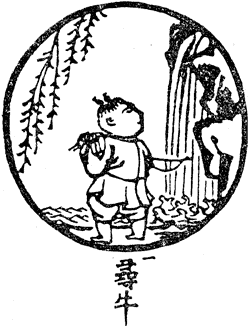
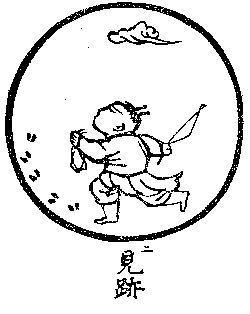
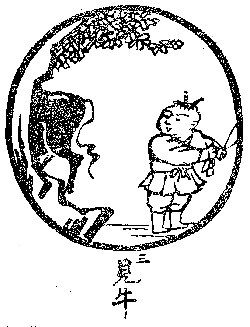
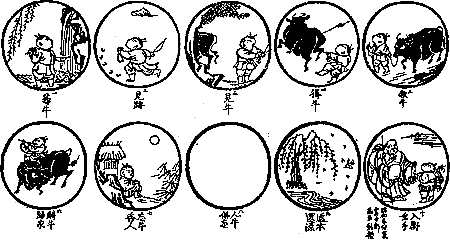
A narrative in "ox-herding" develops between the ox and a boy-tender. Armed with a straw rope for the bull's nose and an ever-ready whip at hand, the boy senses the ox to be nearby in a waterfall. He discovers his tracks in the mud and races excitedly to collar him, only to see the ox's hind quarters disappear in the willows of the stream.
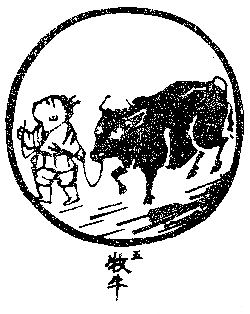
Not to be denied, the boy catches the bull and a great struggle ensues. After many battles and retreats by the bull, the ox is faced round, his will to fight broken. He becomes more gentle than violent. He has been caught but not tamed, that is, made calm in his mind. On the homeward journey, the ox follows quietly behind.
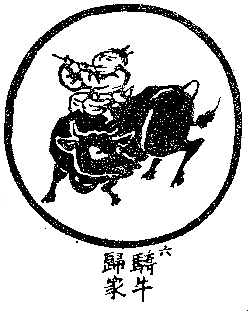
Now his master, the boy eventually rides the ox, playing a passage of peace on his flute. He has moved from a fleeting awareness of the bull's existence, to catching the massive creature to taming it, riding the bull home as one with the animal's nature. There, duality is put to pasture or "forgotten" so they may gambol and cavort, enjoying each other, in their own natures. Discipline is no longer necessary. As one might expect, the ox-herder is beyond himself. He enters the wonder of existence, his mind empty of bull and boy.
Buddhism is a non-theistic relgion because of emptiness. If one fails to realize absolute emptiness, drawn as a circle in ox-herding, one may regress into a conditional, or relative existence, subject to vagaries of word-taught teachings to believers (sravakas) or buddha realized through self-education ( pratyekabuddhas). Absolute emptiness require refuge with a lineage holder of the Buddhist faith, acknowledged often by other Buddhists. It is the guru who possesses the realization an of absolute bodhisattva. One might imagine meeting such a realized person: loving, kind, compassionate, clear, intelligent and tolerant, well-versed in sutras and as tantras, with wisdom love in his heart, transcendent person of light.
Nagarjuna insisted upon emptiness as the turning point or critical juncture of Buddhism. In the seventh and the eighth pictures, the ox, then the boy-tender, disappear in emptiness. No self, no other, no emptiness! Emptiness is empty of itself, of course. It does not exist as an essence or solid experience. Empty, the ox-herding of no mind is without words or conceptual pictures.
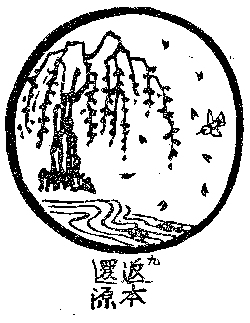
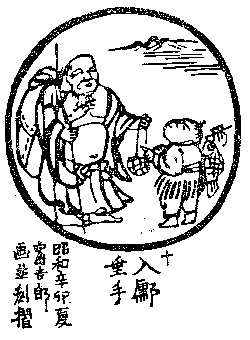
Ox-herding concluds with the appearance again of the relative world. How could it be otherwise? The cycle of the earth returns for more revolutions. With the renewal of spring, a boy-tender meets a holy sage. Is the boy the original ox-herder or a new boy-tender? Is the sage the first ox-tender come of age in emptiness or an unknown, hermit sage, wandering in willows, listenin to the waterfall, awaiting a future boy-tender?
Each interpretation could be true without contradiction. The secret may lie with the sage, who gave the first, and will give the last, boy-tender the impulse to go find the ox, his true nature. Ox-herding describes encounters on the path, from difficult beginnings to completions of lessons. The goal is emptiness, which was always, already, the case.