I. A Musician's Argot
After World War II, the nuclear age began. Music took a left turn with the crazy chords of be-bop, a musician's argot for fast tempo, improvisational jazz and instrumental virtuosity. The chords were sharpened as musical understanding evolved. With be-bop, a new ethic developed on the streets, “the birth of cool.” "Beat Zen" was “in,” squareness was “out.” The slang talk of hepcats, the bohemians and beats, was down, “you dig, daddy-o?”
II. Black-and-White Television
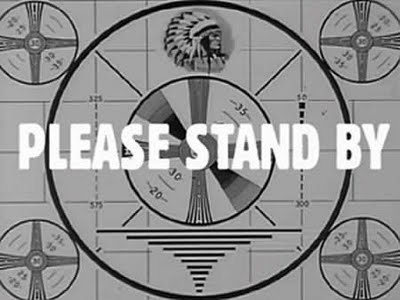
Black-and-white television, a radio-transcending technology, found early viewers watching shows that were interesting as well as relevant. Talk shows featured hip thinkers (Jack Paar) as well as comic philosophers (early George Carlin). Weekly sitcoms even centered on funny satires of human situations and irreverent topics, like space travel and bewitchment of sit-com. Maynard G. Krebs, a new kind of hep cat, always reacted with hysteria to the words "marriage," "police" and "work." The word, "work," caused him to yelp, jump in fear or even faint in a pratfall.
He was a watered-down “beatnik” to be sure, but the audience could not handle anything more cool from the “hip scene." Maynard sported a goatee, cut-off sweatshirt and tennis shoes (not sports models). He never did anything goal-oriented except hang-out at a local grocery store owned by his best friend's father. Dobie always started the show in the famous pose, and at the feet, of "The Thinker," Rodan's classical statue. Of course, like T.V., it was a put on!
III. The Beats
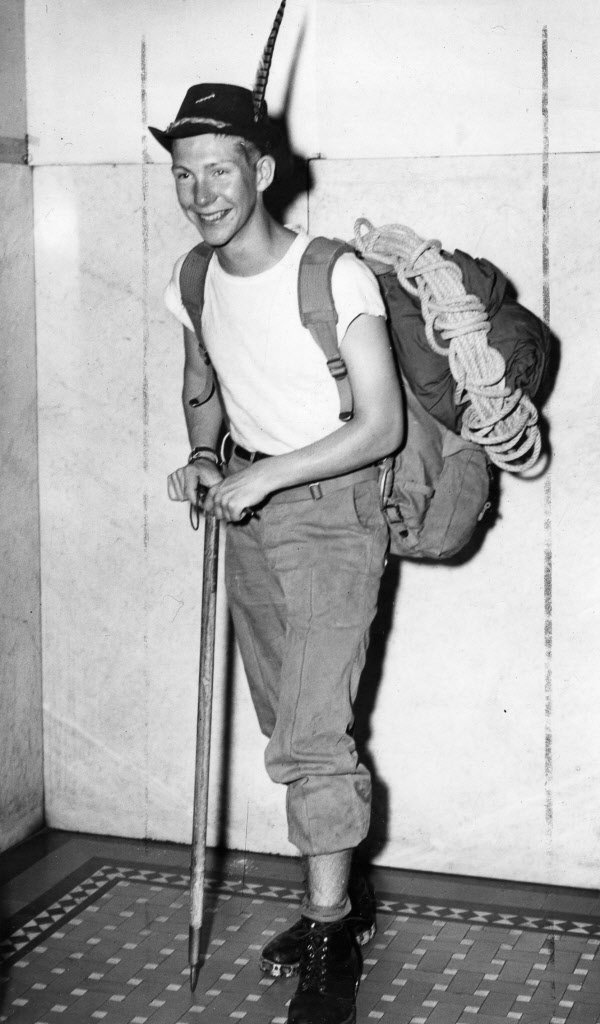
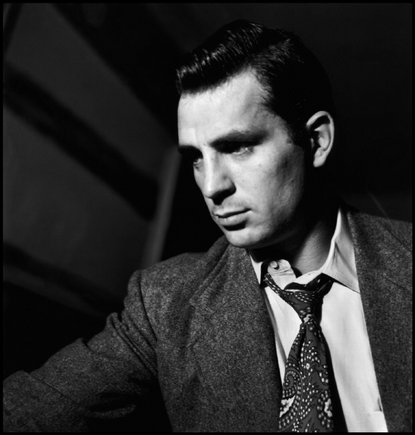
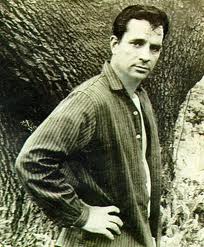
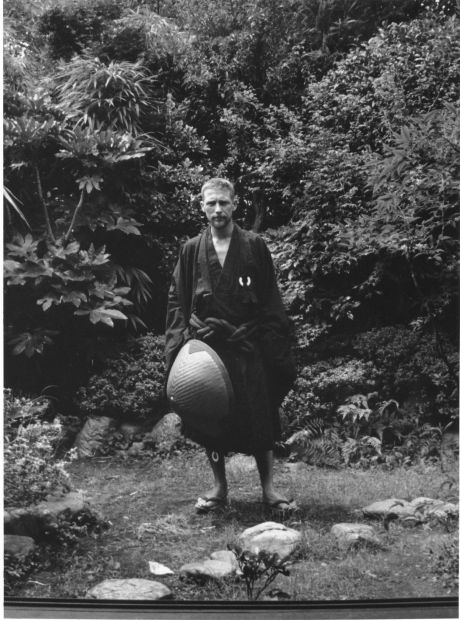
The beat scene began on the East Coast, in Greenwich Village, a subterranean city in New York City. Nearby at Columbia University, a group of odd-ball students, Zen lunatics and misfit poets gathered to form the nucleus of town criers for the future beat generation. Jack Kerouac, a writer important to my work, was the beat maestro. All of the beats migrated between three major cities of North America: New York City, San Francisco and Mexico City. (See Song Cycles). They were the “dharma bums,” the “be(ats)” of Kerouac’s dharmic vision, hopping freights, hoboing across the little known countryside, thumb-out, writing stream-of-consciousness poetry, hosting “be(ins)” or "howls" in San Francisco, rucksacking into the High Sierra or upper Cascades, howling all night, drinking hard cheap wine, chasing women, sitting Zen, studying the Kama Sutra, living in tenement houses, even though they were all intelligent, very middle-class and highly-educated individuals.
Kerouac "goofed" into worldwide fame and success when he wrote about the hepcats in "On the Road," but his better literary works were to come, such as "The Dharma Bums," "Desolation Angels" and "The Subterraneans." He was a unique individual, a true friend of both Gary Snyder, a brilliant poet in his own right, and Allen Ginsberg, the celebrated poet of "Howl" and "Plutonium Ode." "Ginsy" dedicated the Buddhist university poetry school, at Naropa, in Boulder, Colorado, as "The Jack Kerouac School of Disembodied Poetics," which he co-chaired.
Jack's heart was his friends and work. He was first and foremost a poet, although he wrote mainly in prose. He was a regular guy who communicated the everyday nature of the beat scene on Turtle Island, that is, the North American continent. Passionate about be-bop jazz and spoken verse, he wrote about San Francisco and the early beat scenes in Berkeley and Mill Valley with gusto.
IV. Woody, Bob and Folk
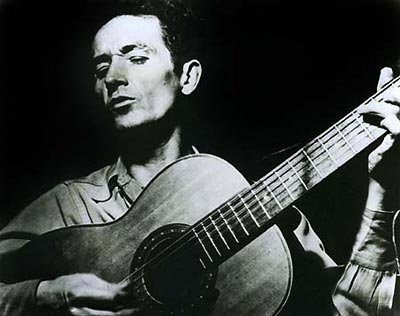
Meanwhile, "something else was goin' on. " The New York City to Cambridge folk axis was forming on the East Coast, a different kind of beat scene given to espresso cafes, collectible LP's, bookstores, Tin Pan Alley songwriters and other "kind(s) of cool," like goatees and shades. Strangely, an Okie, Woody Guthrie, led the charge with "This Land Is Your Land." Pete Seeger, his friend and compatriot, and Lead Belly, an ex-convict turned songster, followed Woody in popularizing new arrangements of old folk tunes and religious songs like "The Hammer Song" and "The Midnight Special."
Another young man from midwestern Minnesota followed Woody to New York where they eventually met. Bob Dylan would match Woody and then take the whole scene in new directions. Bob's early work was pure folk and brilliant, although he played garage rock-and-roll as a youth in his hometown of Hibbing.
He rode the folk boom until it crested. He looked cleanly scrubbed with clothes rumpled, just like he had fallen out of bed. Wane, distracted, cigarette hanging from his fingers, the first albums included two (wha?) b&w covers, his zen already there and very cool. And the voice, his voice..., what was that, all of us asked, not knowing what he was doing? Was he that bad or that good? As he told a British reporter in the documentary, "Don't Look Back," "I hit the notes, I hit them, man, eventually."